


CURRENT Dx Tx Psychiatry
4.34.00 Reviews
App Specs
- Version
- 3.13.1.1
- Updated On
- License
- Free
- Downloads
- 10,000+
- Developer
- Skyscape Medpresso Inc
- Categories
- Medical
- Platform
- Android
Screenshots
 Analysis by AppCompare
I found Current Dx Tx Psychiatry useful as a compact medical reference rather than as a course, patient tool, or replacement for clinical judgement. It is a free Android app in the medical category from Skyscape Medpresso Inc, focused on psychiatric diagnosis, treatment, and testing for both adult and pediatric disorders. My first impression was that it aims to solve a very practical problem: giving a busy learner or clinician a quick way to refresh a topic without opening a large textbook.
That focus makes its appeal fairly clear. If I need a rapid reminder of how a psychiatric condition is approached, a concise reference can be more convenient than searching through general websites. At the same time, a quick-reference app has limits. It is most helpful when I already understand the basics and need organized revision, not when I am trying to learn psychiatry from the ground up or make an important decision without supervision.
What the app is designed to do
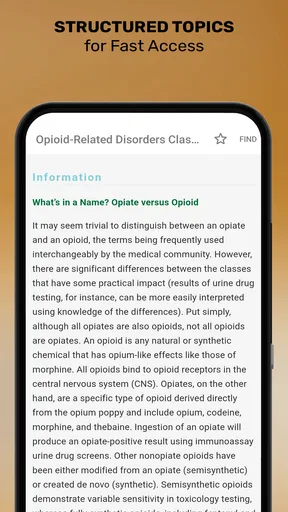
The app’s short description, “CURRENT Dx Tx Psychiatry,” captures its practical orientation. I read it as a point-of-care and study companion built around current diagnosis and treatment topics. The coverage includes adult and pediatric psychiatric disorders, along with related tests and treatment choices. That combination matters because psychiatry is not only about naming a condition; it also involves assessment, differential diagnosis, monitoring, and choosing an appropriate intervention.
In everyday use, I would treat it like a digital pocket handbook. A medical student might use it while reviewing a condition before an exam. A resident could consult it during preparation for a case discussion. A practicing professional might use it to refresh a familiar topic before looking at more detailed guidance. The advantage is the ability to move directly toward a subject instead of starting with a broad internet search filled with mixed-quality results.
The adult and pediatric scope also gives it a wider audience than a reference limited to one age group. However, that breadth should not be mistaken for unlimited depth. A resource that covers both areas in a quick-reference format will naturally be more useful for orientation and review than for exhaustive specialist reading. I would still turn to detailed guidelines, primary literature, or local protocols when the clinical situation is complex or high risk.
Its age rating is Everyone, but that label should not be confused with medical suitability for every reader. The content is still professional medical material. Someone without training may recognize familiar terms but misunderstand the significance of symptoms, tests, contraindications, or treatment decisions. I would use it as an educational reference, not as a self-diagnosis tool.
How I would use it during a normal week
A realistic example would be a trainee preparing for a morning case discussion about a young patient with mood symptoms. Instead of searching the web for disconnected explanations, I would open the relevant psychiatric topic, review the diagnostic framing, and then check the treatment and testing sections. The useful workflow is not simply reading from beginning to end; it is using the app to identify what I need to investigate further.
Worth Reading Before You Choose

Flipboard Shows What News Apps Must Do Beyond the Feed

Switching to Android Auto Means Rethinking Your Driving Routine

Google Calendar Makes a Crowded Week Easier to Manage

Ludo King Makes the Most of the Minutes Between Plans

Baby Panda World Brings Quick Play to Modern Phones, but Its Game Library Feels Busy

ESPN’s Live Game View Makes Following Close Games Easier
For instance, I might use the pediatric material to remind myself which questions deserve attention, then compare that overview with institutional guidance before discussing the case. The app can help me arrive prepared, but it should not be the final authority for an individual patient. That distinction is especially important in psychiatry, where age, comorbidities, developmental history, risk factors, and social context can change the meaning of a symptom.
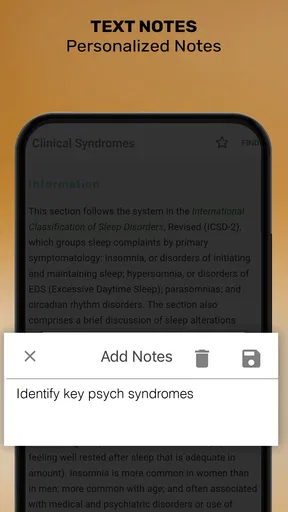
Another practical use is quick revision between larger study sessions. I would read a short section, make my own notes, and then return later to test whether I can recall the main diagnostic and treatment considerations. This works better than passively scrolling because the app becomes a prompt for active learning. It is also a sensible way to identify gaps before opening a more detailed textbook.
Cost, free access, and paid value
The app itself is free to install, which makes trying it relatively easy. That free entry point is valuable for students and professionals who want to inspect the organization before committing money. It also means the app can serve as a supplementary reference without requiring an upfront purchase simply to discover whether its style suits you.
There are in-app purchases listed from $54.99 to $74.99 per item. Those are substantial amounts for a reference app, so I would not treat the free download as proof that the complete experience is free. The important question is whether the material available without payment is enough for your needs and whether the additional paid content provides the depth or convenience you actually want.
I would approach the purchase carefully. First, install the free version and check how much of the psychiatry reference you can genuinely use. Then ask whether you need this particular resource often enough to justify the higher price range. If your main goal is occasional curiosity or basic revision, paying may not offer good value. If you repeatedly need a structured psychiatry reference and prefer this presentation to books or broader databases, the purchase may be easier to justify.
The pricing also changes the comparison with ordinary alternatives. A general web search costs nothing, but it can be slower and less consistent. A printed textbook may offer more explanation but is less convenient to carry and update. A professional subscription database may provide broader evidence and deeper tools, but it can be excessive for someone who only needs a focused psychiatry refresher. This app sits between those options: more targeted than casual searching, but not automatically a substitute for a comprehensive clinical service.
Where the reference format works well
The strongest value is focus. The app is not trying to be a general medical encyclopedia; it concentrates on psychiatry, including diagnosis, treatment, and tests. That makes it easier to justify opening when the question is specifically psychiatric. I appreciate that the scope includes pediatric disorders because age-specific considerations are easy to overlook when using broad adult-oriented resources.
A second strength is its potential to reduce friction during revision. When I am studying, the hardest part is often not finding any information but finding a sensible starting point. A focused reference gives me a path: identify the disorder, review the diagnostic angle, consider testing, and then examine treatment. That sequence can help organize thinking even when I later move to a more detailed source.
A third useful insight is that the app can function as a bridge between memorization and clinical reasoning. It may remind me of terminology or management categories, but I still have to ask whether the information fits the person in front of me. Used this way, it encourages a two-step habit: use the app for orientation, then verify and contextualize before acting. That is a better use than copying a treatment idea directly from a quick reference.
The app is also likely to be convenient for learners who dislike carrying multiple books. Its current version is 3.13.1.1 and it supports Android devices running version 7.0 or later, so it remains accessible to many older compatible phones and tablets. I would still judge the experience on the device I plan to use, especially if I prefer reading on a larger screen or need to consult material while taking notes.
Tradeoffs that matter before relying on it
The biggest tradeoff is brevity versus context. Quick references are efficient because they leave out some of the explanation found in a full textbook. That is useful when I already know the clinical background, but frustrating when I need to understand why one option is preferred, how evidence differs between populations, or how several competing diagnoses should be separated.
Psychiatry also makes context especially important. A short treatment summary cannot replace a complete assessment of safety, coexisting conditions, previous treatment response, substance use, developmental factors, or the patient’s preferences. I would be uncomfortable using any concise reference as the sole basis for prescribing or changing treatment, and this app should be approached with the same caution.
There is another practical tradeoff in the purchase model. Free installation lowers the barrier to testing the app, but the listed paid items mean the full value proposition depends on what is unlocked and how often I use it. At the higher end of the stated purchase range, I would compare it directly with a trusted book or established clinical resource rather than buying impulsively. The right decision depends on repeated usefulness, not on the fact that the download button itself is free.
The rating gives some reassurance that other users have found value in it, with an average of 4.3 from 67 ratings. I would interpret that as encouraging but not definitive. A small rating pool can reflect a particular audience, and a good average cannot tell me whether the app matches my preferred depth, navigation style, or study method. I would use the free access period to make that judgement personally.
The app has more than 10 thousand installs, which suggests it has reached a meaningful medical audience without making it a universally established reference. That is another reason I would keep it in a supporting role. Familiarity and reach are useful signals, but they do not replace checking whether the content fits current local practice and the exact patient situation.
Who is likely to get the most value
I think the best audience is medical students, psychiatry trainees, general clinicians who occasionally handle psychiatric presentations, and healthcare professionals who want a focused refresher. It may also suit someone preparing for an exam who needs a second reference alongside lectures, notes, and more detailed study material.
Students should use it actively rather than reading it as their only textbook. A good approach is to begin with a lecture or chapter, use the app to review the relevant disorder, and then write down the points that remain unclear. This turns the app into a revision tool instead of a shortcut around understanding. The pediatric coverage can be particularly useful for comparing how the same broad psychiatric topic may require different questions or interpretations across age groups.
General clinicians may appreciate the quick orientation when a psychiatric issue appears in a broader medical consultation. Even then, I would use it to frame the next question or identify when specialist input is needed, not to replace referral or a full assessment. The app is most valuable when it helps me prepare for a conversation with a patient or specialist.
On the other hand, I would skip it if I wanted a patient-facing mental health app, therapy exercises, mood tracking, emergency support, or a diagnostic service. Its purpose is professional reference, not ongoing personal care. I would also look elsewhere if I needed an extensive evidence database, formal prescribing support, detailed citation management, or a comprehensive textbook experience.
How it compares with common alternatives
Compared with a search engine, this app offers a narrower and potentially more deliberate route into psychiatric topics. Searching the open web can produce excellent material, but it can also mix patient education, opinion, outdated pages, and specialist documents. A focused reference is more convenient when I already know the subject I want to review. The tradeoff is that a search engine may uncover newer or more specialized material more easily.
Compared with a printed psychiatry handbook, the app is easier to keep with me and quicker to consult in short gaps. A book may feel better for sustained reading and may explain difficult concepts more fully. I would choose the app for rapid revision and the book for building a structured foundation. Neither format removes the need to check current guidance when decisions carry significant risk.
Compared with a large clinical database, this app appears more focused and potentially less overwhelming. That can be an advantage for a learner who wants a direct starting point. A broader database is the better choice when I need extensive references, detailed evidence appraisal, interaction checking, or guidance across many specialties. The paid price range makes this comparison important: the app needs to fit a specific workflow rather than being purchased simply because it covers psychiatry.
My buying decision
I would download it if I were studying or working with psychiatric material and wanted to test a compact reference at no initial cost. I would spend time checking whether the free portion supports my actual workflow, especially whether I can move quickly between disorders, tests, and treatments. I would also compare its usefulness with the books and resources I already trust before considering an in-app purchase.
The paid option can make sense for a frequent user who values a dedicated psychiatry reference and finds the content easier to consult than general alternatives. It makes less sense for occasional readers, people seeking personal mental health guidance, or clinicians who already have access to a more comprehensive professional database. At the listed price range, convenience alone would not be enough for me; I would want regular, repeat use.
Overall, I see Current Dx Tx Psychiatry as a practical supporting tool with a clear audience. Its free installation, focused psychiatric coverage, adult and pediatric scope, and accessible Android requirements make it easy to evaluate. Its limitations are equally clear: quick-reference material cannot provide the full context of a textbook or clinical database, and the paid items require a deliberate value judgement.
My recommendation is to try the free version if you are a learner or healthcare professional who frequently needs a concise psychiatry refresher. Use it to organize questions, prepare for discussions, and guide further reading. I would not recommend relying on it alone for diagnosis or treatment, and I would skip the purchase unless the app becomes a regular part of your work or study routine. Its best value is not replacing expert resources, but helping me reach the right one faster.
Pros
- Quick access to concise psychiatry diagnostic and treatment references
- Useful for reviewing DSM-5 and ICD-10 criteria on the go
- Covers medication classes
- dosing
- and common adverse effects
- Helpful study aid for medical students and mental health trainees
- Works as a practical reference during clinical preparation
Cons
- Clinical content may require verification against current local guidelines
- Some treatment recommendations may not reflect the newest evidence
- Not a substitute for supervision or individualized psychiatric assessment
- Medical terminology can be difficult for patients and beginners
- Offline access and full content may depend on the app version
FAQs for CURRENT Dx Tx Psychiatry
What is CURRENT Dx Tx Psychiatry, and who is it designed for?
CURRENT Dx Tx Psychiatry is a clinical reference app focused on psychiatric diagnosis and treatment information. It is primarily intended for psychiatrists, residents, medical students, psychologists working in clinical settings, and other qualified healthcare professionals. The content is organized to support quick consultation during study or practice, rather than to replace formal training, clinical supervision, or individualized medical judgment.
What type of psychiatric information can I find in the app?
The app generally provides concise, clinically oriented material covering psychiatric disorders, diagnostic considerations, treatment approaches, medications, and related management topics. Its value is the ability to consult structured information in one place instead of searching through a large textbook. However, users should confirm recommendations against current guidelines, local regulations, patient-specific factors, and the latest evidence, since medical information can change over time.
Can patients or nonprofessionals use CURRENT Dx Tx Psychiatry to diagnose themselves?
Although patients may find the app informative, it is not designed to provide self-diagnosis or personal treatment plans. Psychiatric symptoms can have many possible causes, and an accurate assessment often requires an interview, medical history, physical evaluation, and sometimes additional testing. Medication decisions should never be based solely on an app. Anyone experiencing concerning symptoms should speak with a qualified clinician or seek urgent help when there is an immediate safety risk.
Does CURRENT Dx Tx Psychiatry require an internet connection or an account?
Access requirements may depend on the edition, platform, subscription, and licensing arrangement available through the Android or iOS store. Some reference material may be available after installation, while other features or updates can require an internet connection. Certain versions may also request account creation, institutional access, or a paid subscription. Before downloading, review the current store listing for device compatibility, pricing, in-app purchases, and offline-access details.
Is the information in CURRENT Dx Tx Psychiatry suitable for making clinical decisions?
The app can be useful as a point-of-care reference and educational companion, but it should not be treated as the sole authority for diagnosis or treatment. Clinical decisions must consider the patient’s presentation, comorbidities, medications, risks, preferences, and applicable professional guidelines. Because psychiatric prescribing carries important safety considerations, clinicians should verify dosages, contraindications, interactions, warnings, and updates using authoritative sources before acting.


